
Understanding at the speed of need: how AI can make learning more human
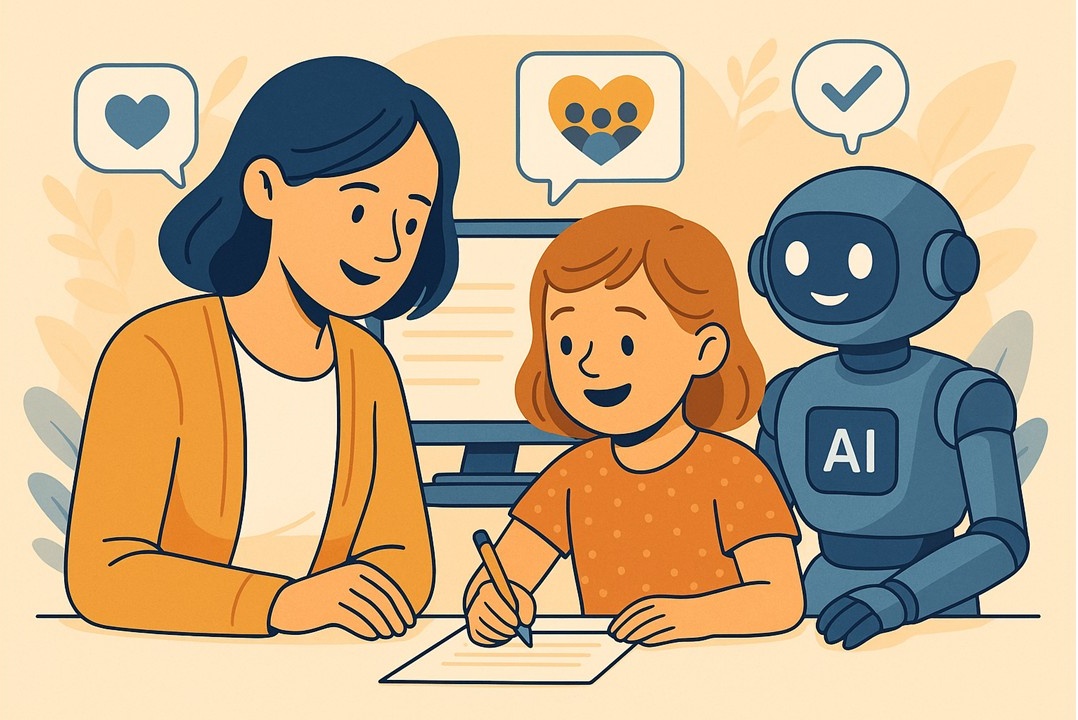
Artificial intelligence is changing the way schools think about teaching and feedback, but its real potential is not about technology. It is about people.
In An Inclusive Future for All, education author and researcher Dan Fitzpatrick explains that AI can make learning more human when it removes barriers to help. He calls this understanding at the speed of need, the idea that support can reach every learner instantly, personally, and without judgement. Fitzpatrick’s message is simple: when technology reduces the time it takes to help, teachers can invest their energy in empathy, encouragement, and connection.
Inclusion, access, and the falling cost of help
For as long as classrooms have existed, time has limited how much help teachers can give. Some pupils get the guidance they need, while others wait or stay silent. AI is starting to close that gap by making responsive help available in seconds. Fitzpatrick illustrates this with the story of a pupil unsure about a question who can now ask an AI tool for clarification, or his sister, who is blind and uses AI-enabled glasses to identify objects and regain independence. Both examples show technology restoring confidence and access.
A new kind of divide
Fitzpatrick also warns that a new gap is forming, not between those who have devices but between those who understand how to use AI and those who do not. Building AI literacy has become an essential part of inclusion. Teachers need to feel confident about using these tools safely so that they can model effective, responsible practice for their pupils.
Teachers first
The promise of AI is not faster marking or bigger data sets. Its value lies in giving teachers back the time to do what only humans can do: guide, question, and inspire. When routine marking and analysis are automated responsibly, teachers can use the insight to focus on higher-order learning and emotional support.
This is the principle behind Writemark, the writing-assessment tool within the Elastik suite. It embodies Fitzpatrick’s ideas by providing curriculum aligned feedback in minutes while keeping teachers fully in control. Every level, comment, and rubric strand can be adjusted or rewritten. The AI supplies the information, but the teacher makes every final decision.
Learning is not linear
Writemark aligns each numerical outcome with the pupil’s year group, showing whether they are working toward, working at, or achieving greater depth. This recognises that learning does not move in straight lines. Some pupils progress steadily, while others make sudden leaps when understanding clicks. Teachers interpret the results through their knowledge of each child and their local context, reflecting Fitzpatrick’s belief that human judgement must remain central.
Belonging as the measure of success
Fitzpatrick concludes that belonging is the true currency of learning. When pupils feel recognised and supported, they take risks, persist through difficulty, and grow. Responsible AI can make that sense of belonging possible for more learners and at greater scale.
In classrooms using Writemark, teachers report that faster feedback improves engagement and confidence. Pupils see what they have done well and what to focus on next, while teachers reclaim the time to talk, celebrate, and plan the next step. Technology enables the connection, but people create the progress.
Responsible practice
All pupil work is processed securely within school systems through Wonde integration. No digital transcription of handwriting is visible to staff or pupils, protecting intellectual property and identity. Schools retain complete ownership of their data, ensuring that ethical practice remains at the core of innovation.
Looking ahead
Dan Fitzpatrick’s research sets out a hopeful path for education: one where AI expands access, restores time, and deepens human connection. Writemark shows that this vision is already happening. It demonstrates how AI can deliver understanding at the speed of need while keeping teachers firmly in charge.
Read Dan Fitzpatrick’s full article An Inclusive Future for All here: https://preview.mailerlite.io/emails/webview/282063/167997210660701500